













Ceremonial Cacao Powder: What It Is and How to Read the Label
Ceremonial cacao powder commands some of the highest prices in the cacao category, and no government or standards body defines what the term means. One bag can hold single-origin whole-bean paste; the next can hold ordinary defatted powder with a wellness markup.
The word on the bag cannot tell the two apart; verifiable specs can. This guide is built to let you judge any ceremonial product by fat content, alkalization, origin, and batch records instead of the word on the bag.
What Is Ceremonial Cacao?
Ceremonial cacao is whole-bean cacao paste made for drinking. Beans are fermented, sun-dried, lightly roasted, and stone-ground into a thick liquor that is poured into molds and sold as blocks, discs, or wafers. Because the natural cocoa butter stays in, the paste melts straight into hot liquid, which is how cacao was consumed long before powder existed.
Two things define the product in practice. The first is physical: ceremonial cacao is the whole bean ground into paste, so it carries everything the bean contains, including its full fat content. The second is positioning: sellers use "ceremonial" to signal minimal processing, traceable origin, and drinking-ritual use, and each seller defines those pillars differently.
No regulator has settled that definition. There is no legal standard for the term in the United States or the European Union, and no certification body verifies it. One brand's ceremonial block may be single-origin cacao from a farmer cooperative, while another's may be conventional cacao with new packaging, so the product underneath has to be judged on its own specifications.
From Mesoamerican Ritual to Modern Wellness Drinks
Cacao drinking began in Mesoamerica, where Maya and Aztec societies prepared a bitter, spiced cacao drink for rituals, feasts, and diplomacy, and used cacao beans as currency. The modern "cacao ceremony" is a contemporary wellness practice inspired by that history, built around slow, mindful drinking in group settings.
Historical records describe Maya and Aztec preparations of roasted, ground cacao whisked with water, chili, and maize, served frothy and unsweetened. Cacao held ceremonial weight at weddings and royal courts, and the beans circulated as money. Spanish colonizers carried the drink to Europe, where sugar and milk turned it into sweet hot chocolate.
The ceremonial revival of the past two decades borrows the older template: a simple cacao drink, prepared deliberately and consumed slowly, usually in meditation or yoga circles. The honest way to read the trend is as a rediscovery of drinking cacao in its whole form, long after industrial processing split the bean into powder and butter.
Ceremonial Cacao Powder vs. Regular Cacao and Cocoa Powder
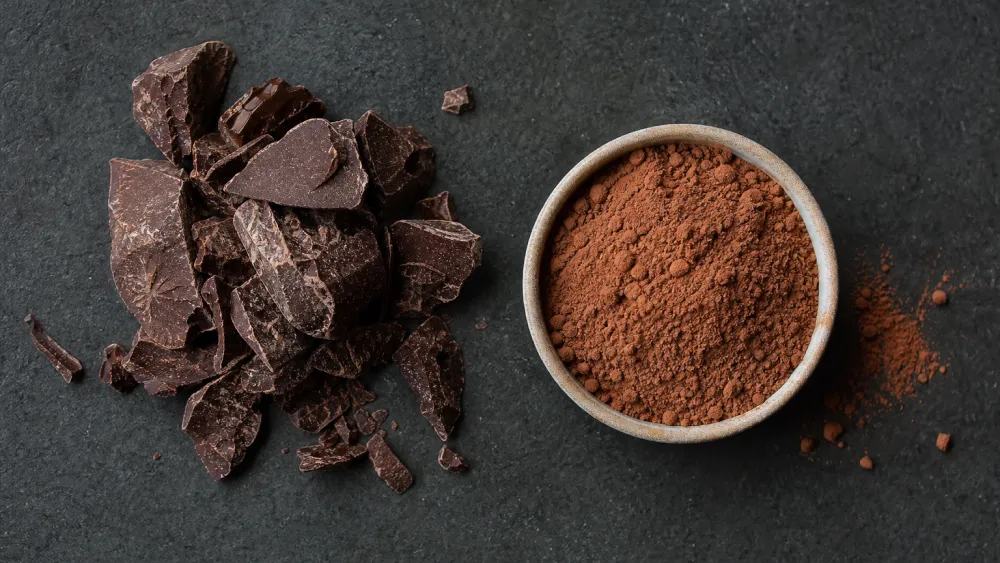
The practical difference comes down to fat and processing. Ceremonial cacao keeps all of its cocoa butter, so it is a paste that softens and melts. Cacao and cocoa powders are pressed to remove most of that butter, which changes flavor, nutrition, and how the ingredient behaves in recipes and on production lines.
| Ceremonial cacao (paste) | Cacao powder | Cocoa powder | |
|---|---|---|---|
| Form | Solid blocks or wafers that melt at 32-35°C | Fine, free-flowing powder | Fine, free-flowing powder |
| Cocoa butter | Full content, about 50-55% of the bean | Pressed down, commonly 10-22% | Pressed down, commonly 10-22%; some industrial grades 4-8% |
| Alkalized | No | Usually no | Often, including Dutch process and near-black grades |
| Processing | Ferment, dry, light roast, stone grind | Roast, press, mill | Hot roast, press, alkalize, mill |
| Typical use | Drinking preparations | Smoothies, home baking, wellness recipes | Baking, confectionery, and beverages at industrial scale |
Two rows of that table explain most arguments on the internet. A product sold as ceremonial cacao in powder form, flowing freely like baking cocoa, has been pressed, because pressing is the step that turns paste into powder. Pressing is not a defect; it is simply how conventional cocoa ingredients are made, and heavily processed grades such as black cocoa powder have their own legitimate uses. The problem is labeling. If a label says ceremonial but the bag flows like flour, the spec sheet will tell you which one it really is.
How Ceremonial Cacao Is Made
Production follows the bean with minimal intervention: harvest, fermentation, sun drying, light roasting, winnowing, then slow grinding until the bean's own fat turns the mass into a liquid paste. The paste is poured into molds and cooled. There is no pressing stage and no alkalizing agent.
Fermentation and drying do most of the flavor work, developing the aroma precursors that roasting later converts into chocolate notes. Ceremonial producers favor light roasts and stone grinding, which keep more of the bean's volatile aromatics and produce a rustic texture that suits whisking into liquid.
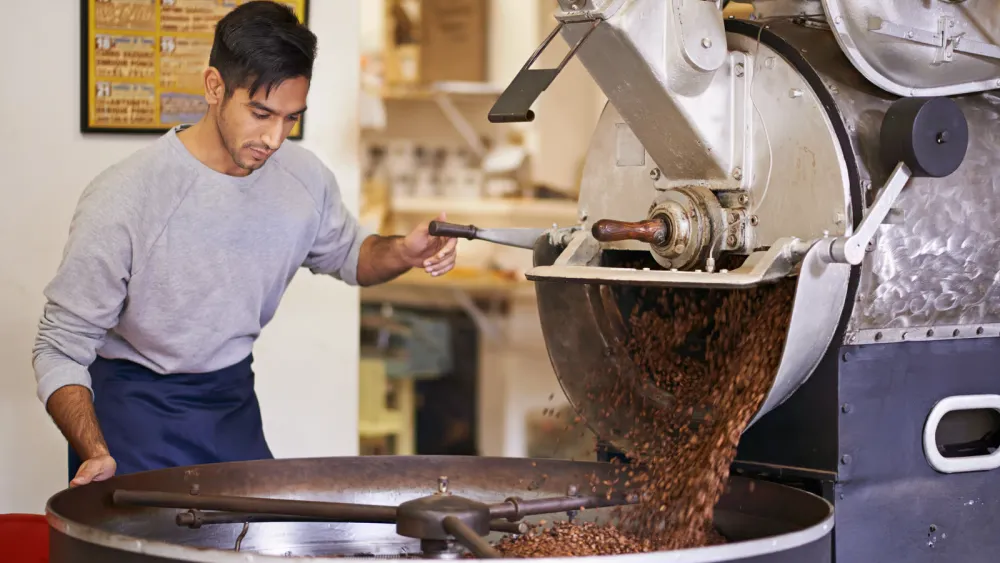
Industrial powder production adds the steps ceremonial cacao skips. Beans are roasted hotter, ground into liquor, then pressed hydraulically to squeeze out cocoa butter, and the remaining cake is milled into powder. Many producers also alkalize the beans or the liquor with a mild potassium carbonate solution to darken color and soften acidity, the process behind Dutch process cocoa powder. Each step has a sound technical reason, and each step moves the product further from the whole-bean profile that ceremonial cacao is meant to preserve.
How to Prepare Ceremonial Cacao
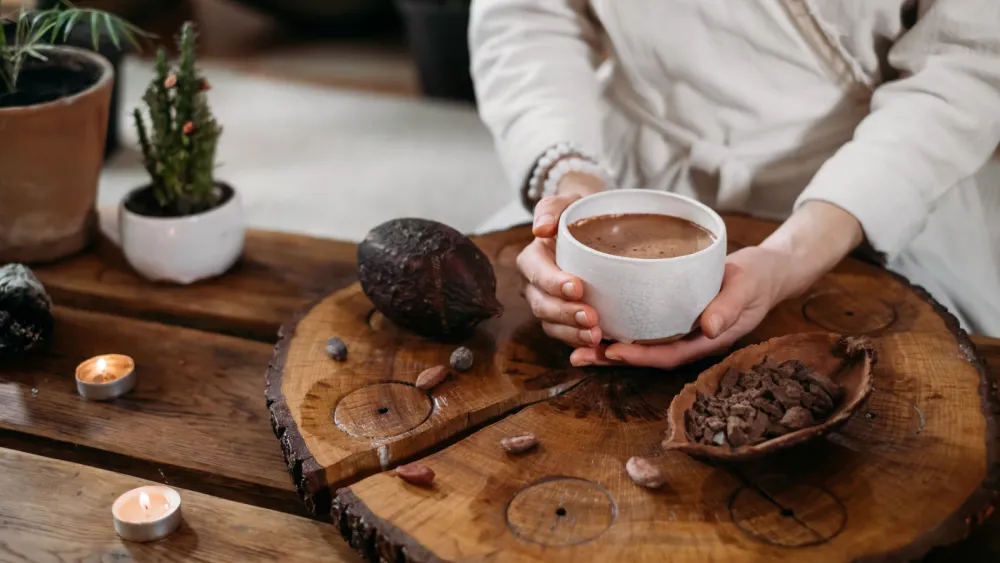
Chop or shave roughly 20 to 30 grams of paste per cup, add hot water or plant milk just below boiling, and whisk until smooth. A traditional wooden molinillo works, and so does a milk frother. Chili, cinnamon, or vanilla follow the Mesoamerican template; sweetener is optional.
The whisking matters more than the equipment. Vigorous frothing emulsifies the cocoa butter into the liquid, giving the drink its body without milk. Because the paste is whole bean, the drink is thick and unsweetened by default, closer to strong coffee than to hot chocolate, and first-time drinkers are often surprised by the bitterness.
Storage is simple but worth respecting. Keep the block cool, dry, and sealed, away from strong odors. If a block melts in a warm kitchen and re-solidifies, white streaks of fat bloom may appear; the paste is still usable, and only the surface texture changes. As with any food product, follow the storage guidance and best-before date on your supplier's specification sheet.
Benefits and Effects: What the Evidence Actually Says
Cacao is naturally rich in flavanols and theobromine, compounds that research links to modest effects on blood flow and alertness. The bolder claims around ceremonial cacao come from tradition and user reports, not clinical trials. Expect a gentle lift, roughly comparable to a mild cup of coffee, and treat stronger promises with caution.
Theobromine is cacao's main stimulant. It acts more mildly and lasts longer than caffeine, which is why many drinkers describe calm focus where coffee gives them jitters. A cup of ceremonial cacao still contains some caffeine, so anyone sensitive to stimulants should treat it accordingly.
On flavanols, the strongest formal backing sits in Europe, where regulators have authorized the claim that 200 mg of cocoa flavanols per day helps maintain endothelium-dependent vasodilation, part of normal blood flow. Processing matters here: a widely cited 2008 study in the Journal of Agricultural and Food Chemistry found that alkalization can destroy a large share of cocoa flavanols, one reason minimally processed cacao retains more of them. What the evidence does not support is absolute language like "guaranteed mood boost" or "40 times the antioxidants," which belongs in the marketing pile.
For pregnancy, medication interactions, or caffeine sensitivity, the safe approach is the same as with coffee: check with a health professional and follow the supplier's nutritional documentation.
Is Ceremonial Cacao Legit? A Buyer's Verification Checklist
The category is real and the label is unregulated. Genuine ceremonial cacao is whole-bean paste from traceable origins, yet some products sold under the name are standard powder with ceremonial branding. Since no certifier polices the term, legitimacy rests on specs a serious supplier can document: fat content, alkalization, origin, and batch testing.
Fat content on the COA. Whole-bean paste sits around 50-55% fat. A "ceremonial" product testing at 10-22% is pressed powder, whatever the bag says.
pH value. Non-alkalized natural cacao is mildly acidic, typically pH 5.0-5.8. A neutral or alkaline reading signals Dutch processing.
Origin and traceability. Reputable sellers name the growing region, and traceability back to specific origins is standard practice among industrial suppliers.
Processing description. The words "pressed," "defatted," or "alkalized" anywhere in the spec mean the product is powder, not paste.
Batch documentation. Ask for a certificate of analysis per batch. Suppliers with in-house labs provide one as a matter of routine.
This checklist is how we work with our own buyers. Wuxi Huanda Cocoa Food Co., Ltd. produces cocoa ingredients in FSSC 22000 certified facilities in Cambodia, China, and Indonesia, sourcing West African beans primarily from Côte d'Ivoire and Ghana, and every batch is lab-tested for fat content, moisture, pH, and color value before shipment, with COA documents provided with each order. Buyers comparing ceremonial-style cacao against conventional ingredients can request specs and samples through our premium cocoa powder page.
Ceremonial cacao powder sits where an old drinking tradition meets a modern wellness market that no regulator has pinned down, and the word on the bag will keep meaning whatever the seller wants. The specs stay honest: fat content, pH, origin, and batch records tell you what you are buying. If you are weighing ceremonial-style cacao against standard ingredients for a beverage line, our team can send specification sheets, batch documentation, and a free sample for testing. Reach us through the contact page.
FAQ