













Cocoa powder color in L*a*b*: typical ranges by grade, how alkalization drives L* and a*, measuremen
Cocoa powder color runs from light reddish brown to near-black, and every point on that range comes from a process decision: bean origin, fermentation, roasting, and above all the degree of alkalization. Trade names like "dark" or "black" describe that range loosely. L*a*b* values describe it exactly, which is why professional specifications quote numbers instead of names. This guide explains what the three values mean, which ranges match each cocoa powder type, how color is measured, and how to write color into a purchase specification so batches stay consistent.
What L*a*b* values mean
L*a*b* (CIELAB) is the standard color space used across the food industry. It describes any color with three numbers:
L* — lightness, from 0 (black) to 100 (white). For cocoa powder this is the main indicator of how dark the powder is.
a* — red-green axis. Positive values mean red, negative mean green. Cocoa powders always sit on the positive side; a higher a* means a redder powder.
b* — yellow-blue axis. Positive values mean yellow, negative mean blue. Cocoa powders are positive here too, and b* falls as alkalization deepens.
Together the three values pin down what trade language calls "intensity" (light to dark, tracked mainly by L*) and "tone" (red-brown to black-brown, tracked by a* and b*). Two powders with the same L* can still look different if one is redder, so a complete color specification needs all three numbers.
Typical L*a*b* ranges by cocoa powder type
Exact values vary with bean origin and process settings, but the ranges below reflect what industrial catalogs and our own production data show for 10-12% fat powders. pH is included because it tracks the same alkalization gradient that drives the color.
| Type | Typical pH | L* (lightness) | a* (red) | Appearance |
|---|---|---|---|---|
| Natural | 5.2-5.9 | 38-45 | 9-13 | Light reddish brown |
| Light alkalized | 6.5-7.2 | 32-38 | 9-12 | Medium brown |
| Medium alkalized | 7.2-7.9 | 26-32 | 7-10 | Deep brown |
| Dark alkalized | 7.8-8.5 | 20-26 | 5-8 | Very dark brown |
| Black alkalized | 8.5-9.0 | 15-20 | 2-5 | Near-black to black |
The pattern is consistent: as pH rises, L* falls and the red tone drains away. The dark end of the scale is covered in detail in our articles on black cocoa powder and the difference between dark and black grades. Red-toned alkalized grades are a separate branch of the same process, where controlled alkalization keeps a* high while L* drops; they serve biscuits and dairy products that need a warm red-brown shade.
What drives the values
Four production factors set the final reading:
Alkalization degree. The dominant factor. Alkali treatment oxidizes and polymerizes cocoa polyphenols into dark pigments; more alkali and longer treatment push L* down and mute a*.
Bean origin and fermentation. Well-fermented Forastero beans start darker than lightly fermented Criollo lots. Under-fermented beans produce powder with a grey or purple cast and uneven color.
Roasting intensity. Heavier roasts darken the solids through Maillard browning before any alkalization happens.
Fat content and fineness. A 20-24% fat powder reads slightly lighter than a 10-12% powder of the same type, because the pale fat dilutes the dark solids. Finer grinding darkens the reading marginally by presenting a smoother surface to the instrument.
Powder color vs finished product color
The number on a COA describes the dry powder. The color your customer sees depends on the application. Wetting darkens cocoa visibly: the same powder looks one to two shades deeper in a beverage than in the bag, because liquid fills the air gaps between particles and reduces light scatter. Fat-based systems do the same. In baked goods, batter pH shifts the hue during baking, and oven heat darkens the surface further.
Practical consequence: qualify a new powder by running it in the real application, and keep the L*a*b* specification as the batch-control tool, not as a direct prediction of finished shade. Our article on cocoa powder pH covers the batter chemistry behind these shifts.
How cocoa powder color is measured
Industry standard practice uses a spectrophotometer reporting CIE L*a*b* under a D65 illuminant with a 10° observer. The powder is pressed into a sample cup or cell to give the instrument a flat, consistent surface, and readings are taken in reflectance mode with a 45°/0° or diffuse/8° geometry. Bench instruments built for powders, such as the HunterLab ColorFlex series and Konica Minolta's powder-capable colorimeters, are the common references.
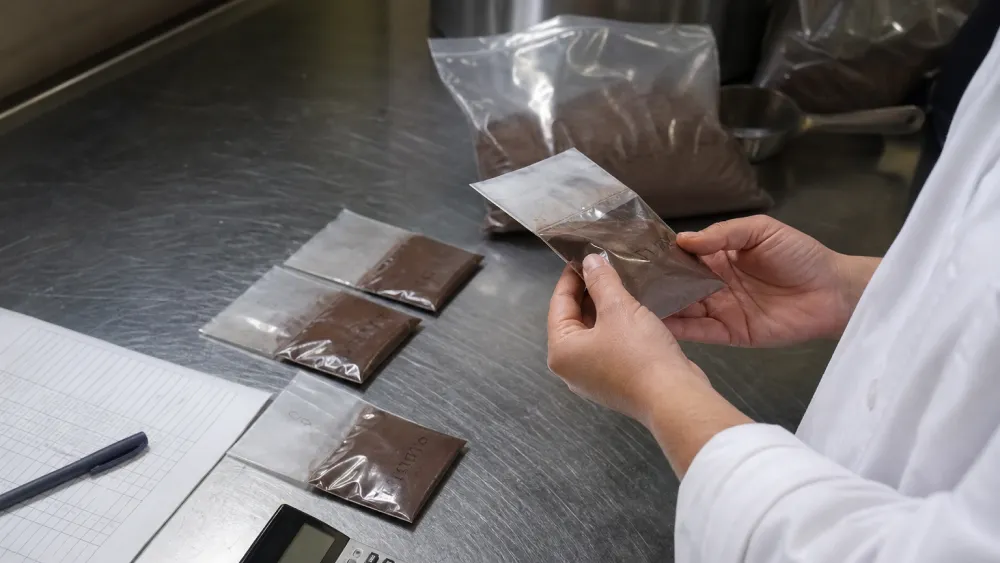
Batch-to-batch agreement is expressed as ΔE, the total color distance between a lot and the reference standard. A ΔE below 1.0 is generally not visible; 1.0 to 2.0 is detectable by a trained observer; above 3.0 most people see the difference. A workable specification for industrial supply sets the target L*a*b* and a ΔE tolerance of 1.5 to 2.0 per lot.
One clarification for buyers searching for a "cocoa powder color code": hex codes and Pantone references circulating online are approximations made for design work. They depend on screen calibration and print conditions, and two powders sharing one Pantone code can behave differently in production. Instrumental L*a*b* values from the supplier's own lab are the only color code that belongs in a food specification.
Writing color into a purchase specification
A color clause that actually protects consistency contains four elements:
Target L*a*b* values with a ΔE tolerance, measured against an agreed master sample.
The measurement method: instrument type, illuminant, observer angle, and sample preparation, so both labs get the same reading.
Retention samples from each shipped lot, kept by both sides for dispute resolution.
An application check for the first deliveries of any new grade, since dry-powder numbers do not fully predict in-product shade.
For the broader grade-selection framework around fat content, pH, and certification, see our guide on how to choose the best cocoa powder.
Which color fits which application
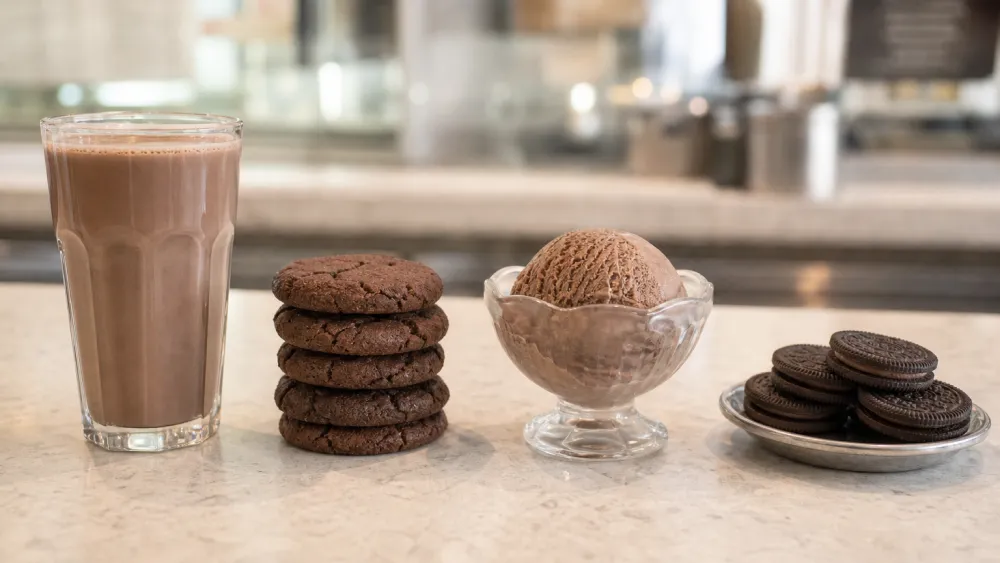
Buyers often ask for the "best" cocoa powder color. There is no single best; each application has a shade that reads as correct to the consumer:
| Application | Typical grade | Target L* | Reason |
|---|---|---|---|
| Chocolate milk and beverages | Light to medium alkalized | 28-36 | Wetting darkens the drink; a mid-brown powder lands right in the cup |
| Biscuits and cookies | Dark or red-toned alkalized | 18-28 | Strong coloring at low dosage; red tones read as "chocolatey" |
| Ice cream and dairy | Medium alkalized | 26-32 | Balances visible color against mild flavor in a cold matrix |
| Sandwich wafers and dark coatings | Black alkalized | 15-20 | Maximum coloring power where flavor comes from the filling or coating |
Our natural vs Dutch-process comparison explains the flavor side of the same choice.
Source cocoa powder to a fixed color specification
Color drift between lots shows up directly on the shelf, so serious buyers fix it in the contract. Huanda Cocoa produces natural and alkalized cocoa powder across the full L* range, including red-toned, dark, and black grades, each manufactured to a declared L*a*b* target with batch COAs and retention samples. Send us your target shade or a physical reference sample through the contact page, and we will match a grade and ship a free sample for verification on your line.
FAQ