













Deodorized vs Non-Deodorized Cocoa Butter: Process, Flavor, and How to Choose
Deodorized and non-deodorized cocoa butter are the same fat. The deodorized type goes through one extra step, a steam treatment under vacuum that strips out most of the cocoa aroma and lightens the color. Non-deodorized cocoa butter, usually sold as natural cocoa butter, keeps its pale yellow color and mild cocoa smell.
Use natural cocoa butter when your product should taste of cocoa, as in dark and milk chocolate. Use deodorized cocoa butter when other flavors or a clean, pale color need to come through, as in most white chocolate.
What Is the Difference Between Deodorized and Non-Deodorized Cocoa Butter?
The two types differ only in the deodorizing step, which changes aroma, color and flavor and leaves the fat itself largely unchanged. Both start as fat pressed from cocoa liquor and then filtered.
Suppliers sell the two products under several names. "Natural", "unrefined" and "non-deodorized" all mean pressed and filtered only, while "deodorized" and "refined" both mean the butter has also been steam-treated. This guide uses "natural" and "deodorized" throughout.
| Property | Natural cocoa butter | Deodorized cocoa butter |
|---|---|---|
| Processing | Pressed and filtered | Pressed, filtered, then steam-treated under vacuum |
| Color | Pale yellow | Off-white |
| Aroma and flavor | Mild cocoa | Faint to neutral |
| Main use in chocolate | Dark and milk chocolate | White chocolate, flavored fillings |
The color and aroma differences in this table both come from the deodorizing step, so that step is worth understanding before you choose.
How Is Cocoa Butter Deodorized?
Deodorizing works because aroma compounds and free fatty acids evaporate far more easily than the fat. When steam flows through hot cocoa butter under vacuum, it carries those compounds off and leaves the fat behind. Free fatty acids are fatty acids that have split away from the fat; when they build up, they give a sharp, soapy taste.
A published cocoa butter process, described in US patent 4,601,790, runs under two key conditions:
Temperature: 150–200°C, with the heating source kept below 205°C.
Vacuum: below 2 mbar, about 1/500 of normal air pressure.
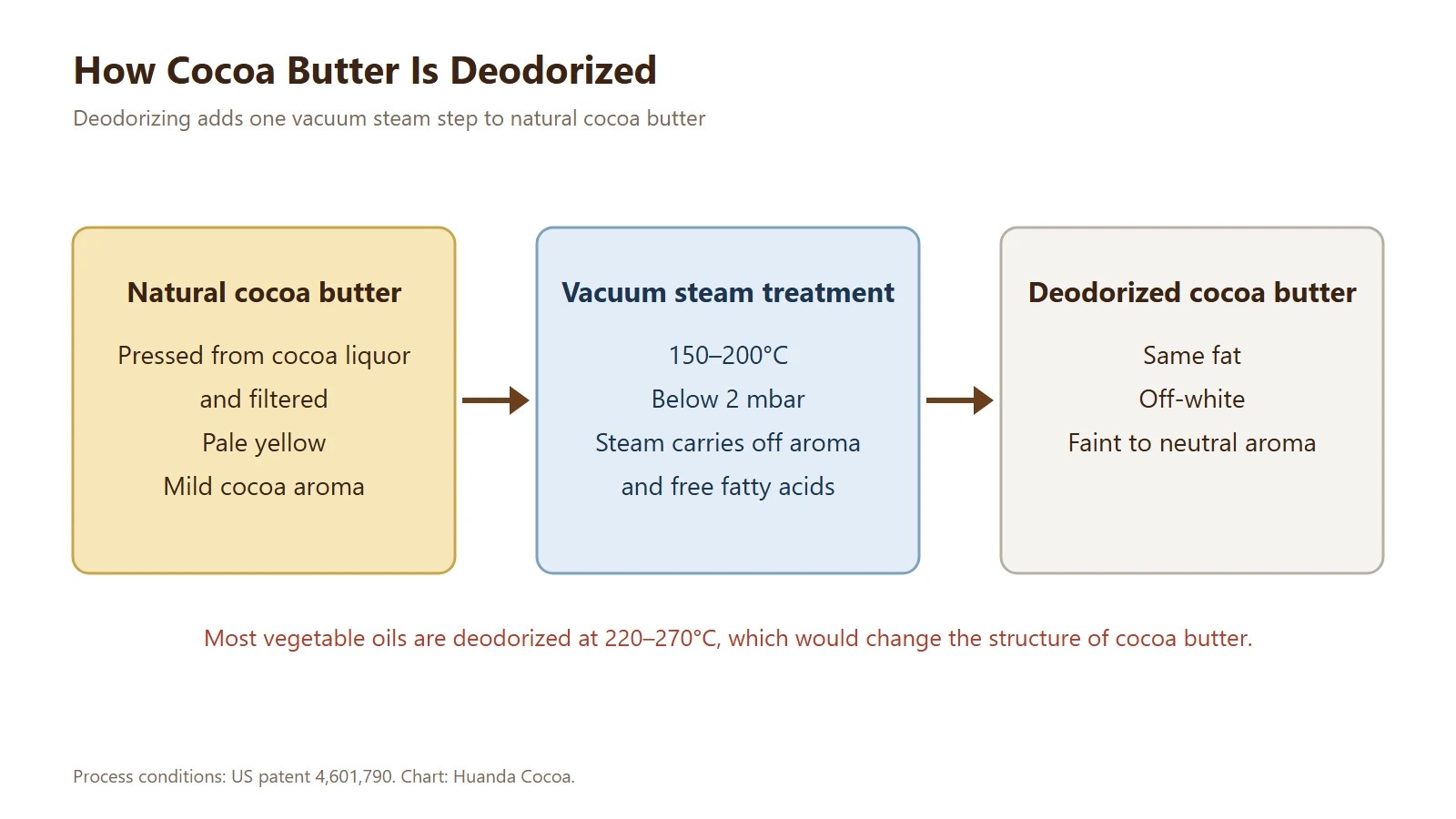
Cocoa butter needs gentler conditions than most vegetable oils. The same patent notes that ordinary oils are deodorized at 220–270°C. That heat would change the structure of the fat molecules that give cocoa butter its sharp melt.
Deodorizing removes cocoa aroma and color and leaves the fat in place, so the choice comes down to how much cocoa character your product should carry.
Which Cocoa Butter Should You Use for Dark, Milk and White Chocolate?
Use natural cocoa butter in dark and milk chocolate, and deodorized cocoa butter in most white chocolate and in fillings where fruit, nut or spice flavors should lead.
| Product | Usual choice |
|---|---|
| Dark chocolate and couverture | Natural |
| Milk chocolate | Natural, or part deodorized for a milder cocoa note |
| White chocolate | Deodorized for a clean dairy taste; natural for a cocoa-forward white |
| Fruit, nut and flavored fillings | Deodorized |
| Colored coatings and decorations | Deodorized |
| Extra butter added to thin bean-to-bar chocolate | Deodorized to keep the bean flavor in front; natural for a rounder cocoa note |
Why White Chocolate Shows the Difference Most
White chocolate contains no cocoa solids, so cocoa butter is its only cocoa ingredient. The U.S. standard for white chocolate requires at least 20% cocoa fat, 3.5% milkfat and 14% total milk solids, and it allows no added coloring.
With nothing to mask it, the butter’s aroma and color carry straight into the finished bar. Deodorized butter gives the clean, milky taste most white chocolate is sold on. Natural butter adds a light cocoa note and a warmer color, which some makers choose on purpose.
Switching an existing recipe from one type to the other affects more than taste, so plan the change before you order.
What Changes When You Switch Between Natural and Deodorized Cocoa Butter?
Flavor and color change when you switch. Melting and setting behavior should stay the same, provided the butter was deodorized at controlled temperatures like those described earlier. Commercial cocoa butter melts at about 32–35°C, and our guide to cocoa butter melting point explains how crystal forms and test methods shift that figure.
Plan for three points when you change butter in an existing recipe:
Taste and color: moving to deodorized butter gives a milder cocoa note and a lighter shade, which shows most in white and milk chocolate.
Process temperature: butter deodorized at oil-refining temperatures can lose its melting and setting behavior, so ask the supplier for the deodorizing temperature range.
Trial run: before the first production order, run a tempering trial and a shelf test with your own recipe.
Whichever type you settle on, the documents that come with each delivery show which one you have actually received.
How Can You Tell Which Type You Are Buying?
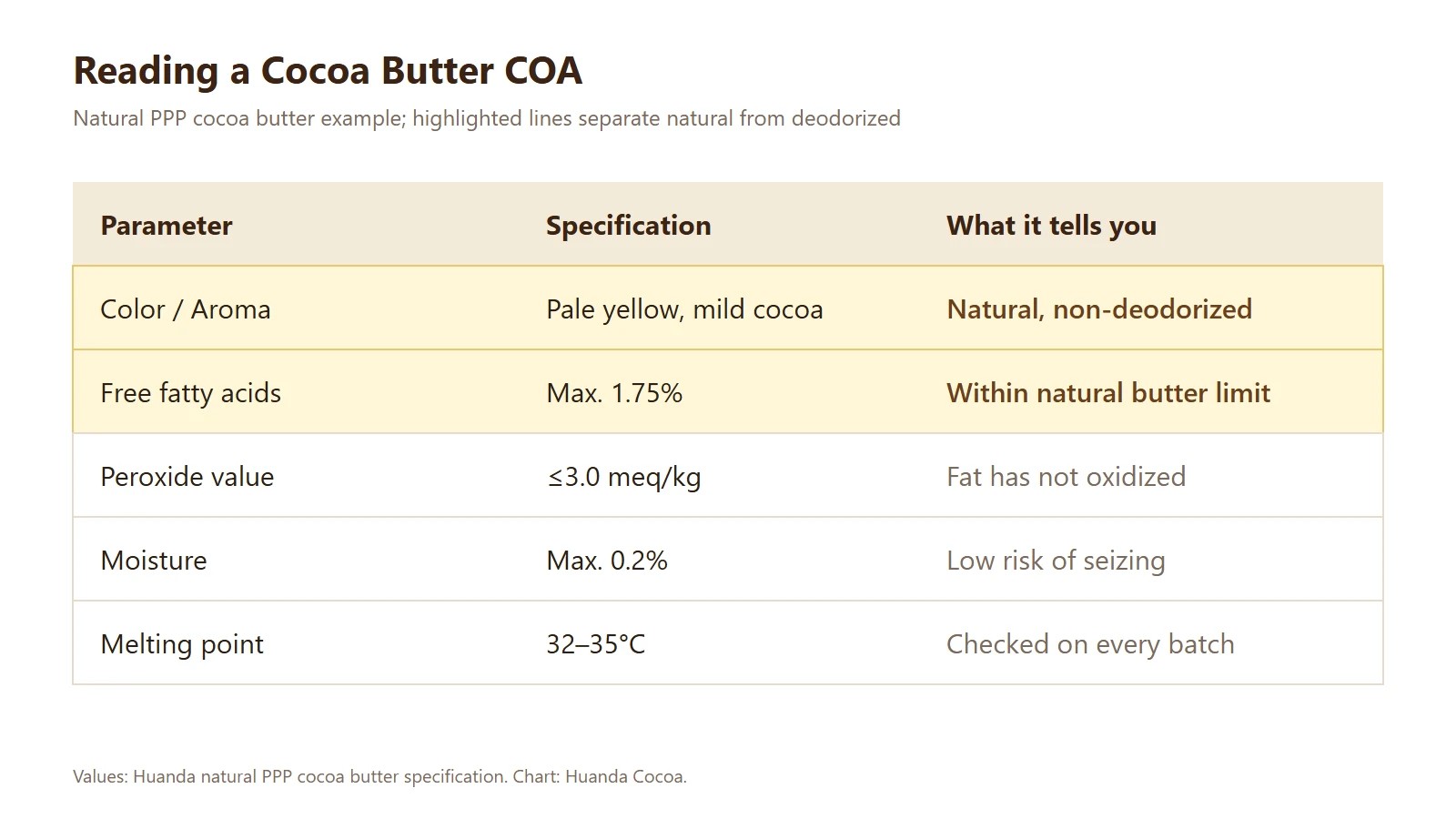
Check the specification sheet and the batch certificate of analysis (COA), the lab report issued with each production lot. Three lines on these documents separate natural from deodorized butter: the processing statement, the color and aroma description, and the free fatty acid result.
Processing statement: look for "natural", "non-deodorized" or "deodorized". A sheet that says only "pure cocoa butter" needs a follow-up question.
Color and aroma: natural butter is described as pale yellow with a cocoa aroma, deodorized butter as off-white and neutral.
Free fatty acids: the international standard for cocoa butter allows up to 1.75%, and natural butter is sold against that limit. Deodorizing strips free fatty acids along with aroma, and the patented process above brings them below 0.1%. A result near zero therefore points to deodorized butter.
Two more checks confirm quality for either type:
Peroxide value and moisture: a low peroxide value shows the fat has not oxidized, and low moisture prevents chocolate from seizing during production.
Contaminants for EU sales: EU rules cap cocoa butter at 5.0 μg/kg benzo(a)pyrene and 30.0 μg/kg for four PAHs combined, both measured on the fat. PAHs are combustion contaminants that can come from smoky bean drying. If your chocolate is sold in the EU, ask whether the supplier tests for them.
A sample gives a quick cross-check: warm a small piece in your hand, and natural butter will smell of cocoa while deodorized butter will smell of very little.
What to Write in a Purchase Specification
Writing these points into your purchase specification prevents a mix-up at delivery. A specification for natural cocoa butter can read as follows:
Product: cocoa butter, natural (non-deodorized), pure prime pressed (PPP), meaning pressed mechanically from cocoa liquor with no solvent extraction
Color and aroma: pale yellow, mild cocoa aroma
Free fatty acids: max. 1.75%, as oleic acid
Peroxide value and moisture: max. 3.0 meq/kg and max. 0.2%
Melting point: 32–35°C, with the test method stated
Documents: COA with every batch
For deodorized butter, change the product and the color and aroma lines, and agree a free fatty acid limit with the supplier.
Huanda supplies natural, non-deodorized PPP cocoa butter pressed from West African beans (Côte d’Ivoire and Ghana) at our Cambodia facility. Each batch ships with a COA covering free fatty acids, peroxide value, moisture, melting point and microbiological indicators. You can compare these figures with your current supply on our natural PPP cocoa butter specifications page.
FAQ