













Fair Trade Cocoa Powder: What Fairtrade Certification Actually Means
Fair trade cocoa powder means the raw cocoa beans were grown and traded under the Fairtrade International certification price system. The core mechanism is simple: regardless of how market prices swing, farmers selling certified beans receive a guaranteed minimum price, plus a fixed premium they can invest in their communities. This system started in 1994 and now covers more than 450,000 cocoa farmers worldwide. This article breaks down what Fairtrade certification actually guarantees, what it doesn't, and how to evaluate whether a supplier's fair trade claim holds up.
What Fair Trade Cocoa Powder Actually Is
Fair trade cocoa is cocoa harvested and traded under a Fairtrade-certified price support scheme involving farmers, traders, and chocolate manufacturers. The goal is straightforward: create sustainable income for farming families, independent of volatile commodity markets.
The first fair trade cocoa certification dates back to 1994, issued by the Netherlands-based Max Havelaar Foundation for Green & Black's Maya Gold Chocolate, made with cocoa from Belize. Max Havelaar later merged into Fairtrade International (FLO), the nonprofit now used by 25 member countries under a shared certification mark. In the US market, Fair Trade USA split from FLO in 2011 and now operates its own certification standard.
The certification mechanism works on three layers:
Fairtrade Minimum Price: A price floor. No matter how far market prices fall, certified beans cannot be purchased below this level.
Fairtrade Premium: A fixed payment on top of either the minimum price or the market price (whichever is higher), which farmer cooperatives decide how to invest — schools, healthcare, farming technology upgrades.
Organic Differential: An additional premium for beans that also carry organic certification, covering the extra compliance and production costs of organic farming.
The 2026 Price Reset: What Changed
In December 2025, Fairtrade International announced its largest price increase in years, effective October 1, 2026:
| Price Element | Previous | New (from Oct 2026) | Change |
|---|---|---|---|
| Minimum Price (Ghana, regulated market) | ~$2,400/MT | $3,500/MT | +45% |
| Minimum Price (Côte d'Ivoire, regulated market) | ~€2,200/MT | €3,200/MT | +45% |
| Premium (global) | $240/MT | $275/MT | +15% |
| Premium (Côte d'Ivoire) | ~€220/MT | €250/MT | +13% |
| Organic Differential (global) | $300/MT | $450/MT | +50% |
The reset follows historic price volatility in cocoa markets — futures peaked near $12,000/MT in 2024 before falling below $6,000/MT by late 2025. Even during high-price periods, farmers often don't fully benefit because gains get eaten up by extreme weather, crop disease, and inflation. The minimum price increase is designed to build a stronger income safety net against what Fairtrade describes as a "perfect storm" of climate change, market volatility, and rising costs.
Côte d'Ivoire and Ghana are "regulated markets" — both governments set a unified farmgate price — so the Cocoa Standard includes special premium allocation rules for these two countries. Starting October 2026, a fixed 40% of the Fairtrade Premium must go directly to cooperative members as cash payouts, with 10% each allocated to cooperative organizational investment, member farm services, and community projects.
What Fairtrade Certification Guarantees
Beyond pricing, the Fairtrade Cocoa Standard includes social and environmental requirements:
Prohibition of child labor and forced labor — a mandatory, non-negotiable standard requirement.
Safe working conditions on farms and processing facilities.
Restrictions on GMOs and agrochemicals, pushing toward more sustainable farming practices.
Traceability requirements tracking cocoa from farm to export.
Independent third-party auditing conducted by FLOCERT, a Germany-based, ISO 17065-accredited certification body.
The cooperative model is central to how this works in practice. Ghana's Kuapa Kokoo Farmers Union, with 105,000 members, is one of the world's largest Fairtrade-certified cocoa cooperatives. Since 2019, it has promoted Dynamic Agroforestry — combining cocoa with diverse crops and tree species to mimic natural forest succession — improving soil health and climate resilience while generating year-round harvests that diversify farmer income.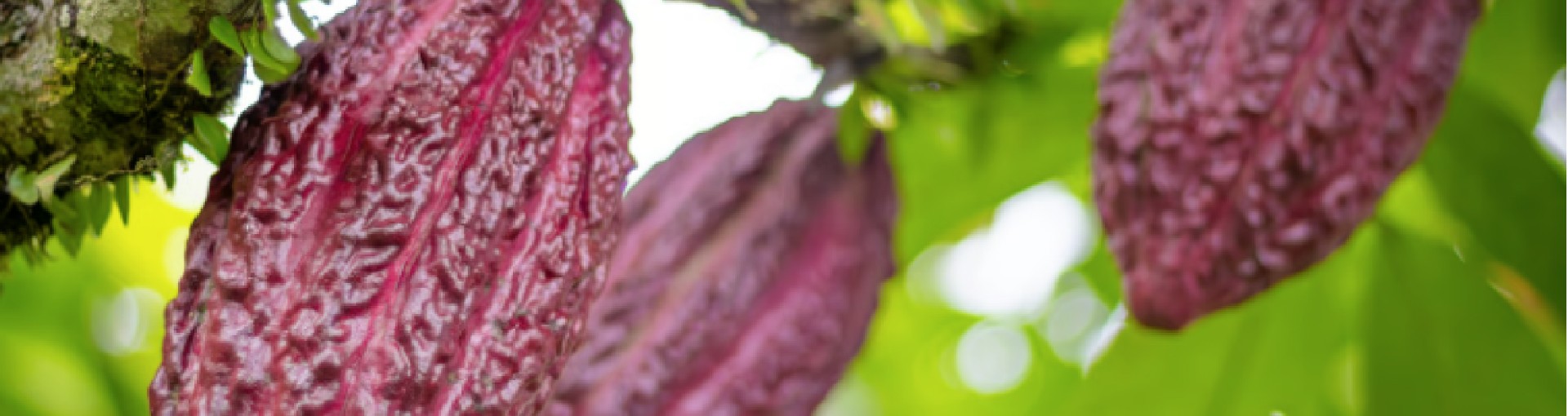
What Fairtrade Certification Doesn't Guarantee
This is where buyers and consumers most often misunderstand the system. Fairtrade is a rigorous price and process standard, but it has clear limits:
It doesn't eliminate child labor entirely: the standard prohibits it explicitly, but certification relies on audit sampling, not continuous monitoring. A 2020 report found more than 1.5 million children aged 5–17 working on cocoa farms in Côte d'Ivoire and Ghana — a figure covering the broader industry, not Fairtrade-certified farms specifically, but it illustrates the scale of the structural challenge.
It doesn't guarantee a "living income": the minimum price is a safety net, not a guarantee of a livable standard of living. Some retailers and initiatives — Tony's Open Chain in the Netherlands, for example — have publicly stated that existing Fairtrade or Rainforest Alliance certifications alone "are not sufficient" to guarantee living incomes, and that additional, income-targeted interventions are needed.
Certification fees don't go to farmers: companies pay certifying bodies for audits and certification, and that money is separate from farmer payments.
Labeling thresholds are relatively low: products marketed as "Fair Trade chocolate" typically need only 20% of ingredients (cocoa, sugar, vanilla) from certified sources. Some products carry the label with just one certified ingredient.
Despite three decades of operation, Fairtrade-certified products still capture only a small share of the global cocoa trade — industry estimates put it around 0.5%. That gap is part of why advocacy groups like Solidaridad in the Netherlands continue pressuring retailers. A 2024 study found that 93% of chocolate sold in Dutch supermarkets failed to provide farmers a living income.
Fairtrade vs. Rainforest Alliance: Two Different Systems
Fairtrade and Rainforest Alliance run in parallel in the cocoa supply chain, with different mechanisms:
| Comparison | Fairtrade | Rainforest Alliance |
|---|---|---|
| Pricing mechanism | Fixed minimum price + fixed premium | Premium negotiated annually, variable amount |
| Premium allocation | ~Half paid directly to farmers in cash | Mostly used for training, technique, and inputs; lower cash share |
| Primary focus | Income security and labor rights | Environmental protection and sustainable farming |
| Certifying body | FLOCERT (independent third party) | Rainforest Alliance's own certification system |
The two aren't mutually exclusive — many cocoa farms carry both certifications simultaneously. For buyers, understanding the mechanism difference helps evaluate whether a supplier's sustainability claims hold real substance.
How Buyers Should Evaluate Fair Trade Cocoa Powder Suppliers
For food manufacturers sourcing Fairtrade-certified cocoa powder, a few practical verification steps:
Verify the certification is active: request a valid FLOCERT certificate number, which can be checked against the official Fairtrade database.
Understand the supply chain layer: ask which specific cooperatives the cocoa originates from and how premiums are actually allocated.
Confirm labeling compliance: if you plan to use "fair trade" labeling on your end product, confirm your ingredient percentage meets the relevant certifying body's threshold.
Consider dual-certified suppliers: suppliers holding both Fairtrade and Rainforest Alliance certification typically reflect broader sustainability coverage across price and environmental dimensions.
For brands looking to emphasize ingredient sustainability, Fairtrade certification can be a meaningful differentiator — but it needs to be communicated accurately to avoid overstating what the certification covers.
Huanda Cocoa's Approach to Sustainable Sourcing
Huanda Cocoa sources cocoa beans from Côte d'Ivoire and Ghana and tracks farmgate price policy and Fairtrade minimum price developments closely. We understand that food manufacturers increasingly need supply chain transparency and verifiable certification claims. If your product requires cocoa powder with specific certification documentation, contact us to discuss your requirements.
FAQ