













White Cocoa Powder: Does It Exist?
<
White cocoa powder appears in marketplace listings, drink premix catalogs, and supplier offers often enough that buyers treat it as a standard grade. It is not. No commercial process turns cocoa solids into a white powder, because the brown color of cocoa is chemically built into the solids themselves. Products sold under this name fall into three groups: powdered cocoa butter, white drinking chocolate blends, and misdescribed or adulterated powder. This guide explains why genuine cocoa powder cannot be white, what each product behind the label actually contains, how to verify a sample before committing to an order, and which ingredient really solves the application behind the search.
What white cocoa powder actually is
Short answer for buyers and bakers: white cocoa powder, in the sense of a white version of regular cocoa powder, does not exist. Cocoa powder is the defatted solid fraction of the cacao bean, and that fraction carries the bean's pigments. The lightest genuine cocoa powders on the market, natural grades from lightly roasted beans, come out light brown to beige. Anything whiter than that range is either a different ingredient (usually cocoa butter), a formulated blend, or a powder that has been diluted or chemically whitened.
Why real cocoa powder cannot be white
Fresh cacao cotyledons start out pale ivory to violet inside the pod. Three processing steps turn them brown:
Fermentation. Polyphenols oxidize and condense, and tannins polymerize into brown pigments. This step alone fixes most of the final color.
Drying and roasting. Maillard reactions between sugars and amino acids add more brown color, along with the roasted flavor compounds that define cocoa.
Alkalization, where applied, pushes color darker still, from reddish brown through deep brown to near-black at high pH. Dutch processing moves strictly in the dark direction, and no reverse step can lighten the solids afterward. Our natural vs Dutch-process comparison covers this color behavior in detail.
Because the pigment molecules are part of the solid fraction, removing fat does not lighten the powder. Pressing a cocoa cake harder produces a darker low-fat powder, which is why genuine low-fat grades look deeper in color than high-fat grades of the same type.
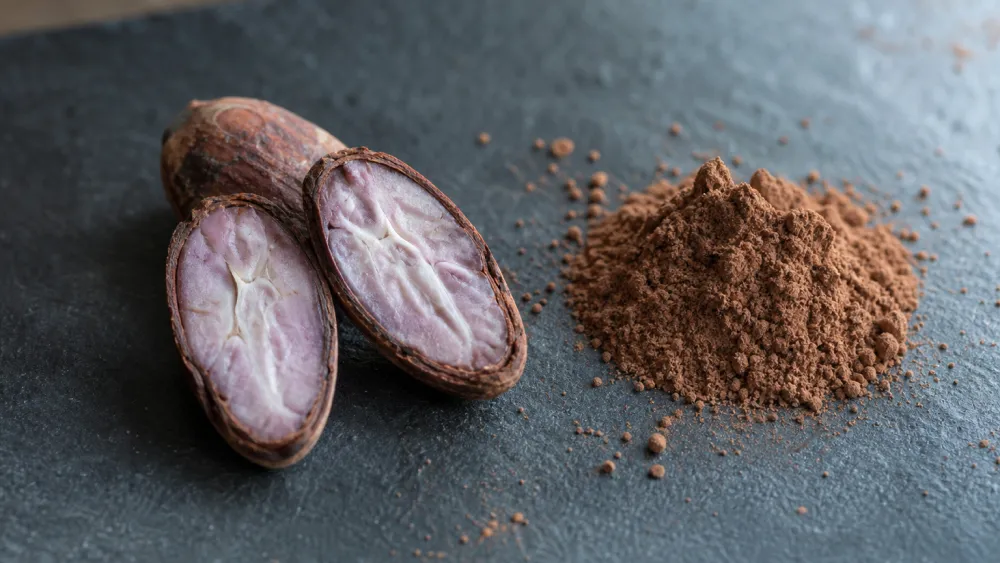
Three products sold under the same name
| Product | Composition | Appearance | Behavior |
|---|---|---|---|
| Powdered cocoa butter | 100% cocoa butter, or cocoa butter on a maltodextrin carrier | Ivory to white | Melts at 32-35°C; no cocoa solids, no chocolate flavor |
| White drinking chocolate | Sugar, cocoa butter (typically 15-30%), milk powder, flavoring | White to cream | Sweet; disperses in hot milk; a beverage mix, not a baking cocoa |
| Misdescribed or adulterated powder | Cocoa powder cut with starch or milk powder, or chemically whitened | Pale grey-brown to chalky white | Weak cocoa aroma; fails fat, pigment, and solubility checks |
All three appear in trade channels as "white cocoa powder". Only the first two are legitimate products, and neither of them is cocoa powder.
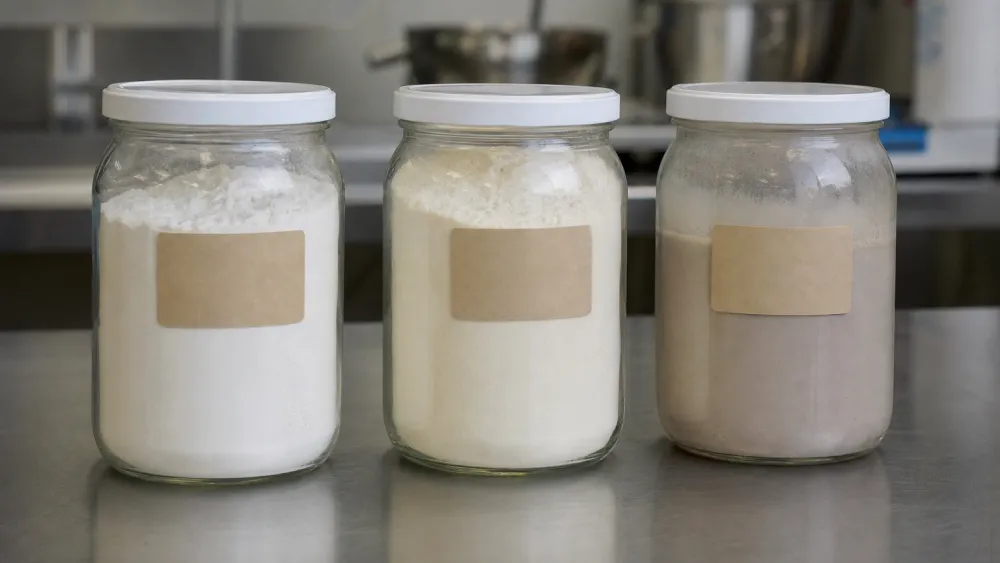
How white cocoa powder relates to cocoa butter
The only genuinely white material the cacao bean yields is its fat. Cocoa butter leaves the press ivory to pale yellow, melts just below body temperature, and carries a mild cocoa aroma without any of the bean's pigments. Powdered cocoa butter also exists as a professional ingredient: spray-cooled or crystallized cocoa butter in free-flowing powder form, best known through tempering aids dosed at roughly 1% of chocolate mass to seed stable crystals. Deodorized grades run paler and neutral in flavor for cosmetics and pharmaceutical use.
When a pastry supplier or chocolatier asks for "white cocoa powder", powdered cocoa butter is usually the product they mean. It contributes fat, melt, and mouthfeel, and zero cocoa flavor, because cocoa flavor lives in the solids. Buyers who need that flavor still need a real cocoa powder, and real cocoa powder will always be some shade of brown.
How to identify fake or mislabeled white cocoa powder
For industrial buyers, an offer of "white cocoa powder" deserves verification before sampling. Four checks settle most cases:
Fat content on the COA. Genuine cocoa powder runs 10-12% fat (low-fat grades) or 20-24% (high-fat grades). Powdered cocoa butter runs close to 100%, or 60-80% when spray-dried on a carrier. A bright white powder claiming 10-12% fat contradicts the physics of the bean.
Titanium dioxide (E171). A brilliant chalk-white "cocoa" product may owe its color to added whitening pigment. The EU withdrew authorization of E171 as a food additive in 2022 after EFSA concluded that genotoxicity concerns could not be excluded, and other markets are reviewing it. Such a product cannot legally enter the EU, and the ingredient list must declare the pigment where it is used.
Simple bench tests. Stir the powder into hot water: even a few percent of true cocoa solids turns the liquid visibly brown. Warm a spoonful to 35°C: powdered cocoa butter collapses into clear melted fat, while real cocoa powder stays a dry solid. A drop of iodine solution exposes starch dilution through an immediate blue-black reaction.
Price logic. Cocoa powder pricing tracks bean and processing costs, as our cocoa powder price analysis explains. An offer sitting far below the prevailing range for standard grades implies dilution with cheaper solids.
Suppliers of legitimate powdered cocoa butter and white drinking chocolate state the composition openly. Vague specifications and missing COAs are the strongest warning sign in this category.
Where genuine light-colored cocoa products come from
Buyers who need the palest possible real cocoa have legitimate options, within limits:
Natural, low-roast cocoa powder is the lightest true cocoa powder available, typically light brown with a sharp, fruity acidity.
Raw cacao powder skips roasting and keeps more of the bean's original light tan color, as covered in our raw cacao powder guide. It stays beige to light brown. It never turns white.
Lightly alkalized grades sit only slightly darker than natural powder. The heavy end of the alkalization scale goes the other way entirely, up to the near-black grades described in our black cocoa powder article.
If the application requires actual white color, the honest solutions sit outside cocoa powder: powdered cocoa butter for fat functionality, or white chocolate powder for sweet beverage and dessert work.
Applications: what to use when a recipe calls for white cocoa powder
Most searches for white cocoa powder come from one of four practical needs. Each has a correct ingredient:
| Application goal | Correct ingredient | Note |
|---|---|---|
| White hot chocolate and café beverages | White drinking chocolate (cocoa butter, milk powder, sugar) | Cocoa butter content of 15-30% gives the creamy body |
| Tempering aid for chocolate work | Powdered cocoa butter at about 1% of chocolate mass | Seeds stable Form V crystals without extra equipment |
| White dusting or decoration | Powdered sugar, milk powder, or powdered cocoa butter | Powdered cocoa butter also works as a savory frying coating |
| Chocolate flavor in a pale product | Lightest natural cocoa grade, dosage adjusted | Some browning is unavoidable; cocoa flavor requires cocoa solids |
The last case deserves a direct statement: no grade of real cocoa powder delivers chocolate flavor without brown color. Formulators working on blondies, vanilla-style coatings, or pale ice cream bases either accept a light tan shade from a low-dose natural cocoa or switch to cocoa butter plus vanilla for a cocoa-family flavor without the tint. Our guide on how to choose the best cocoa powder covers grade selection by application in more depth.

Sourcing honest cocoa ingredients
Confusion around white cocoa powder costs buyers money twice: first on a product that cannot perform, then on reformulation. Huanda Cocoa manufactures natural and alkalized cocoa powders across the full color and pH range, together with pure prime pressed cocoa butter, in FSSC 22000 and Halal certified plants. We do not list a "white cocoa powder", because an honest catalog keeps the three products that name confuses separate: cocoa powder for flavor and color, cocoa butter for fat and melt, and formulated blends for beverages. Send your application and target parameters through the contact page, and we will confirm which ingredient fits and ship free samples with full COA documentation.
FAQ